Nightly
No. 74Friday, 25 September 20263 min read

Fri 25 Sept

You’re reading an archived edition. Today’s is here →

Top picks

read these, skip the rest
Top pickResearcharXiv cs.AI

The Benchmark for Retrieving Information in EHRs (BRIE) is an automatically generated QA dataset for EHRs, validated by 19 clinicians and continuously maintainable.

  • 19 clinicians validated benchmark
  • 9 LLMs evaluated
  • Multi-document synthesis often missed

BRIE is created by a scalable framework that extracts question‑answer pairs from longitudinal notes, addressing the high cost and rapid obsolescence of manually curated benchmarks. Evaluation across nine large language models and five inference strategies shows that state‑of‑the‑art systems frequently omit clinically important details, especially when answers require synthesis across multiple documents and encounters. The dataset is designed for ongoing updates as clinical language evolves.

arxiv.org
Top pickResearcharXiv cs.LG

A graph‑based framework combines a hierarchical Bayesian model with a Gaussian Process on Graph kernel to infer spatially correlated railway maintenance environments from real data.

The approach integrates accurate environment modeling with scalable decision support, enabling inference of deterioration correlations across the network. By leveraging real‑world railway data, the method overcomes the computational limits of centralized reinforcement learning and the coordination gaps of purely decentralized policies, offering a tractable solution for large‑scale infrastructure asset management.

arxiv.org
Top pickResearcharXiv cs.CL

An agentic framework uses social‑context tools to infer speaker intent in conspiratorial Hebrew tweets, evaluated on a dataset covering 80‑90% of public tweets from late 2018 to early 2023.

  • 80–90% tweet coverage
  • 4‑year span 2018‑2023

The dataset spans several election cycles and the COVID‑19 pandemic, providing a rich temporal context. By issuing social queries, the system captures nuanced illocutionary forces beyond surface lexical cues, improving detection of conspiratorial discourse compared to keyword‑only methods. The framework demonstrates how contextual signals can disambiguate endorsement, criticism, satire, or mockery in online conversations.

arxiv.org
Top pickResearcharXiv cs.PL

Forte introduces a sensitivity type system for Rust that leverages ownership to enforce differential‑privacy guarantees.

The system extends graded sensitivity analyses to imperative Rust code, handling mutable borrows while preventing aliasing issues. Its soundness theorem ensures metric preservation across function boundaries, bridging a gap between privacy theory and practical Rust deployments.

arxiv.org
Top pickReleasehackaday

CERN released the open‑source VHDL library “colibri” for FPGA development, announced on Hackaday.

The colibri library provides a collection of reusable VHDL components tailored to CERN’s high‑energy‑physics experiments. By making the code publicly available, CERN enables external developers to adopt and contribute to FPGA designs, accelerating prototyping and collaboration across research institutions.

10 stories
Top pickResearcharXiv cs.AI

The Benchmark for Retrieving Information in EHRs (BRIE) is an automatically generated QA dataset for EHRs, validated by 19 clinicians and continuously maintainable.

  • 19 clinicians validated benchmark
  • 9 LLMs evaluated
  • Multi-document synthesis often missed

BRIE is created by a scalable framework that extracts question‑answer pairs from longitudinal notes, addressing the high cost and rapid obsolescence of manually curated benchmarks. Evaluation across nine large language models and five inference strategies shows that state‑of‑the‑art systems frequently omit clinically important details, especially when answers require synthesis across multiple documents and encounters. The dataset is designed for ongoing updates as clinical language evolves.

arxiv.org
Top pickResearcharXiv cs.LG

A graph‑based framework combines a hierarchical Bayesian model with a Gaussian Process on Graph kernel to infer spatially correlated railway maintenance environments from real data.

The approach integrates accurate environment modeling with scalable decision support, enabling inference of deterioration correlations across the network. By leveraging real‑world railway data, the method overcomes the computational limits of centralized reinforcement learning and the coordination gaps of purely decentralized policies, offering a tractable solution for large‑scale infrastructure asset management.

arxiv.org
Top pickResearcharXiv cs.CL

An agentic framework uses social‑context tools to infer speaker intent in conspiratorial Hebrew tweets, evaluated on a dataset covering 80‑90% of public tweets from late 2018 to early 2023.

  • 80–90% tweet coverage
  • 4‑year span 2018‑2023

The dataset spans several election cycles and the COVID‑19 pandemic, providing a rich temporal context. By issuing social queries, the system captures nuanced illocutionary forces beyond surface lexical cues, improving detection of conspiratorial discourse compared to keyword‑only methods. The framework demonstrates how contextual signals can disambiguate endorsement, criticism, satire, or mockery in online conversations.

arxiv.org
NewsHacker News172 pts

A Hacker News post curates daily‑updated recommendations for the best large language model at each budget tier.

The post aggregates publicly available pricing, performance, and licensing information to help engineers quickly identify suitable LLMs without extensive research. Updates occur each day to reflect new model releases, price changes, and emerging open‑source alternatives, providing a practical reference for cost‑conscious development.

Releasedeepmind blog

DeepMind announced Gemini 3.8 Live, featuring a real‑time avatar that interacts visually and verbally.

The Gemini 3.8 Live release adds an avatar layer to the language model, enabling dynamic facial expressions and synchronized speech. This aims to make human‑AI interaction more natural for applications such as virtual assistants, education, and customer support, while retaining Gemini's underlying language capabilities.

ResearchAnthropic

Anthropic reported on Sep 23, 2026 that Claude discovered a novel enzyme system containing CRISPR‑like repeat sequences.

The discovery suggests a new class of programmable nucleic‑acid enzymes that could expand synthetic biology toolkits. Anthropic highlighted the finding as part of Claude's broader research agenda, indicating potential future collaborations with biotech firms to explore functional applications of the enzyme system.

Releasehuggingface blog

Hugging Face introduced LFM2.5‑VL‑DSpark, a system designed to accelerate vision‑language models.

LFM2.5‑VL‑DSpark employs distributed training and model‑parallel techniques to reduce latency and improve throughput on multimodal benchmarks. Early results show measurable speed‑ups compared to baseline pipelines, making large vision‑language models more practical for real‑time applications such as video analysis and interactive AI agents.

RepoHF trending1,042 likes

TaichuAI released ZDTaichu5.0‑9B, an image‑text‑to‑text model that has received 8,313 downloads and 1,042 likes on Hugging Face.

  • 8,313 downloads
  • 1,042 likes

The model is built on a 9‑billion‑parameter backbone and supports multimodal generation, allowing users to input images and receive descriptive text. Community interest is reflected in its download and like counts, indicating relevance for research and product prototyping in vision‑language tasks.

RepoHF trending446 likes

XiaomiMiMo released MiMo‑V2.6‑Distill‑Qwen‑9B for image‑text tasks, garnering 5,705 downloads and 446 likes on Hugging Face.

  • 5,705 downloads
  • 446 likes

This distilled version targets efficient deployment while maintaining performance comparable to larger Qwen‑based models. It is positioned for developers needing lightweight multimodal capabilities on edge devices or constrained environments.

RepoHF trending485 likes

XiaomiMiMo released MiMo‑V2.6‑Pro‑RL, a reinforcement‑learning fine‑tuned text‑generation model with 9,841 downloads and 485 likes on Hugging Face.

  • 9,841 downloads
  • 485 likes

The model incorporates reinforcement learning from human feedback to improve generation quality and alignment. Its popularity reflects interest in RL‑enhanced language models for applications such as chatbots, content creation, and instruction following.

6 stories
Top pickReleasehackaday

CERN released the open‑source VHDL library “colibri” for FPGA development, announced on Hackaday.

The colibri library provides a collection of reusable VHDL components tailored to CERN’s high‑energy‑physics experiments. By making the code publicly available, CERN enables external developers to adopt and contribute to FPGA designs, accelerating prototyping and collaboration across research institutions.

Releasehackaday

A DIY standalone DJ system built on an ESP32 was featured on Hackaday, allowing portable DJing without a laptop.

The system integrates audio playback, mixing controls, and a web‑based interface into a single ESP32 board, powered by a battery for on‑the‑go use. Its compact design demonstrates how embedded hardware can replace traditional laptop‑centric DJ setups for hobbyists and live performers.

NewsHacker News292 pts

A recent firmware update rendered Samsung smart refrigerators inoperable, causing food spoilage for owners.

The update appears to have bricked the devices' control boards, preventing cooling and temperature monitoring. Users report loss of perishable items and are seeking warranty or rollback solutions. The issue highlights risks of OTA updates in appliances.

Newslwn

After a two‑year hiatus, LWN released the 2026 edition of the Kernel Report at the Kernel Recipes conference.

  • two-year hiatus

Jonathan Corbet discussed recent acceleration in kernel development, community responses, and future directions. The talk was recorded and posted on YouTube for broader access. It marks the continuation of an annual deep‑dive series for kernel enthusiasts.

lwn.net
NewsHacker News227 pts

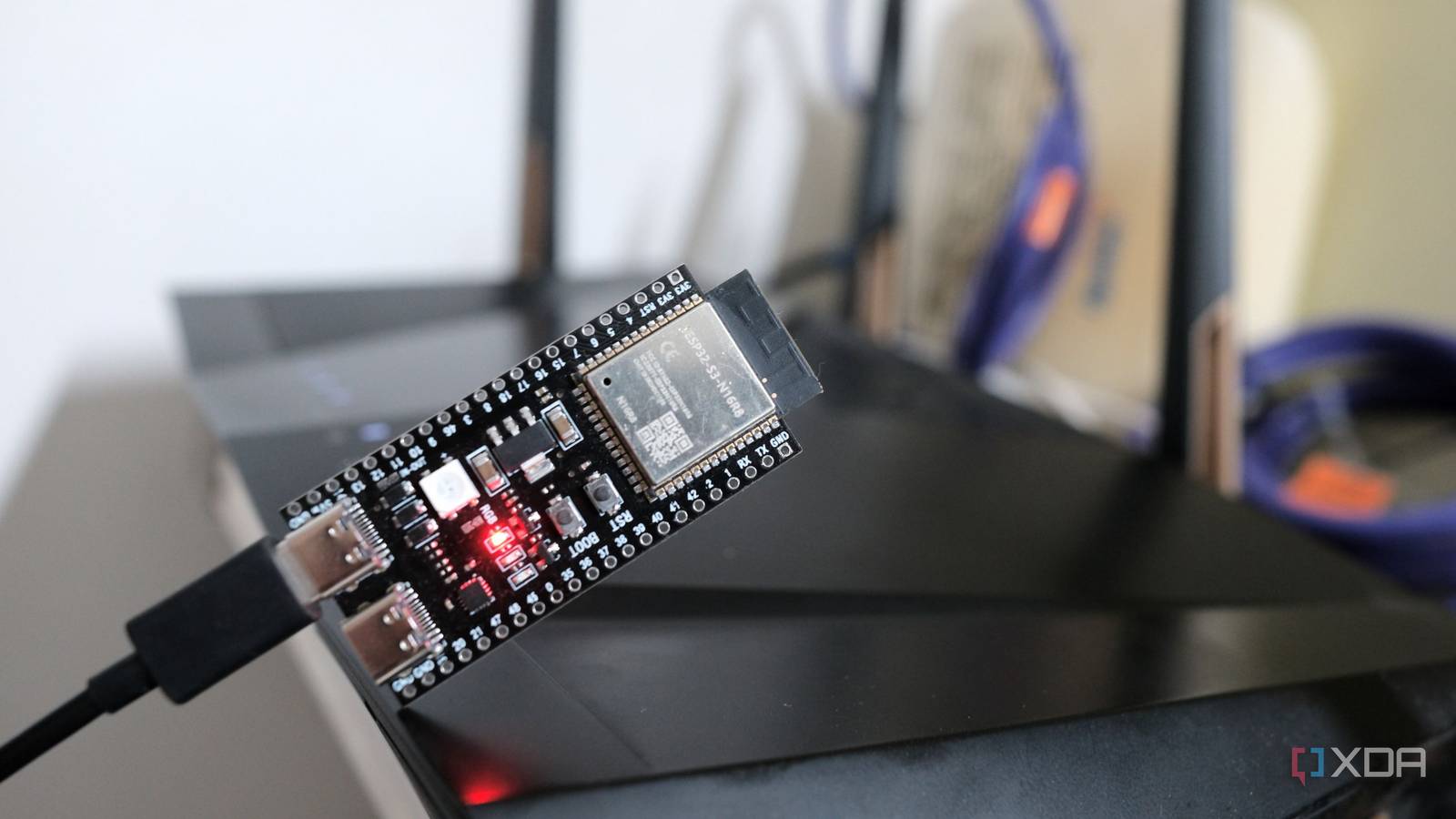
The latest ESP32 variant can run Linux, narrowing the performance gap with Raspberry Pi devices.

The new chip integrates sufficient RAM and storage interfaces to support a minimal Linux distribution, enabling developers to run familiar toolchains on a low‑cost microcontroller. While still less powerful than a Pi, it expands ESP32 use cases beyond bare‑metal IoT.

Researchlwn

Researchers disclosed file‑notification attacks that let adversaries spy on user activity across Android, Linux, macOS, and Windows without read permissions.

  • KDE5 and KDE6 vulnerable

On Linux, inotifywatch can be abused for inter‑keystroke timing attacks, and monitoring /usr/bin/pkexec enables UI‑redress attacks on KDE 5/6. The vulnerabilities remain unpatched, exposing credential theft vectors on multiple platforms.

lwn.net
6 stories
Top pickResearcharXiv cs.PL

Forte introduces a sensitivity type system for Rust that leverages ownership to enforce differential‑privacy guarantees.

The system extends graded sensitivity analyses to imperative Rust code, handling mutable borrows while preventing aliasing issues. Its soundness theorem ensures metric preservation across function boundaries, bridging a gap between privacy theory and practical Rust deployments.

arxiv.org
ResearcharXiv cs.CR

A model quantifies the security risk of mining before block validation in Nakamoto consensus, establishing a power‑threshold for safe operation.

The analysis incorporates bounded network delay and a validation‑time bound independent of load, showing that below the threshold honest chains remain stable. An attack is described that forces honest miners onto invalid branches, highlighting trade‑offs of early mining.

arxiv.org
ResearcharXiv cs.PL

DueList provides first‑class SMT support for arbitrary‑size lists using abstract combinators, improving automated reasoning about recursive data structures.

The approach abstracts list operations via map‑reduce‑style combinators and employs abstraction‑refinement to guide solvers. This enables verification tools to handle functional‑style list manipulations that previously caused solver blow‑up.

arxiv.org
ResearcharXiv cs.DC

KernelOPT uses a multi‑agent system to optimize GPU kernels generated by compilers, preserving vendor library calls and targeting Triton sub‑kernels.

  • five LLM agents
  • four-gate verification

The agents are profiling‑guided and coordinate to refine kernel code while maintaining end‑to‑end model correctness. Verification includes static checks, multi‑seed correctness, float64 fallback at model level, and final performance validation, reducing the gap to expert‑written kernels.

arxiv.org
ResearcharXiv cs.PL

Loom is a tuning‑free symbolic compiler that translates tile‑based SPMD programs into static schedules for spatial dataflow accelerators.

By treating compilation as a hardware‑explicit optimization problem, Loom enumerates feasible schedules without empirical autotuning, improving portability across AI and HPC accelerators that expose on‑chip communication and asynchronous pipelines.

arxiv.org
ResearcharXiv cs.DC

GCPSL with four H100 GPUs achieves 85% CIFAR‑10 accuracy in 6.13 minutes, versus 19.09 minutes when workloads run serially.

  • 256 logical clients
  • 85% CIFAR-10 in 6.13 min
  • 19.09 min serialized

The method clusters 256 clients into parallel split‑learning workloads, improving data participation without increasing per‑client batch size. A label‑aware variant further reduces training time, demonstrating scalability of split learning on multi‑GPU systems.

arxiv.org
6 stories
RepoGitHub trending · python27,315 ★

Fosowl/agenticSeek offers a fully local AI agent that browses the web and writes code without external APIs or subscription fees.

  • No $200 monthly API cost

The tool runs entirely on the user's hardware, consuming only electricity. It aims to provide autonomous assistance for research and development while avoiding recurring cloud expenses.

RepoGitHub trending5,411 ★

FxEmbed/FxEmbed enables enhanced embeds for X/Twitter and Bluesky, supporting multiple media types on platforms like Discord and Telegram.

The project adds support for images, videos, polls, and translations within embeds, improving cross‑platform content sharing for social media posts. It is open‑source and community‑maintained.

RepoGitHub trending · rust3,455 ★

Mesh-LLM is an open-source Rust library that lets users share compute privately or publicly to run distributed LLM agents and chat.

The project targets developers who need to run large language models across multiple machines without relying on centralized services. It uses Rust's async runtime to coordinate compute sharing and can operate in private peer‑to‑peer mode or expose resources publicly. By leveraging local hardware, it reduces latency compared with cloud APIs.

RepoGitHub trending · c++370 ★

pyrowave is a C++ project listed on GitHub Trending, but no description is provided in the announcement.

The repository contains the source code for pyrowave, a C++ project that has attracted attention on GitHub Trending, but no description or documentation is provided in the listing. Interested users will need to explore the code to determine its purpose.

RepoGitHub trending · rust2,370 ★

cs2-dumper is a Rust tool that extracts memory offsets from Counter‑Strike 2 for modding or analysis.

cs2-dumper reads the Counter‑Strike 2 process memory to locate dynamic offsets used by the game engine. These offsets are essential for developers creating mods, tools, or analysis scripts that need stable memory addresses across updates. The tool is written in Rust and outputs the offsets in a simple text format.

RepoGitHub trending · python292 ★

Laya is an open-source Python command‑center that locally aggregates notifications from Slack, Gmail, GitHub, Jira, Notion, Outlook, Calendar and more, using local LLMs via Ollama or LM Studio, with optional BYOK cloud model support.

Laya runs as a local daemon, pulling notifications from multiple services and summarizing them with an LLM before presenting a concise view. Because processing happens on the user's machine, sensitive data stays private unless the user opts to use a cloud model via Bring‑Your‑Own‑Key. It can be extended with additional connectors through its plugin system.

You’re all caught up.

28 stories from 210 scanned overnight.

archived edition · 210 fetched → 28 publishedj/k move · enter expand · o open · / search