Nightly
No. 65Wednesday, 16 September 20263 min read

Wed 16 Sept

You’re reading an archived edition. Today’s is here →

Top picks

read these, skip the rest
Top pickResearcharXiv cs.AI

JustFit runs a 27‑billion‑parameter Qwen3.8 model on a 24 GiB MacBook, extending single‑request context to 212 k tokens (6.93× baseline) and achieving 19.11 tokens/s on a 32K‑input test.

  • 24 GiB M4 Pro MacBook
  • 212,992 context positions (6.93×)
  • 19.11 tokens/s on 32K‑64 probe

JustFit integrates three mechanisms—KVExec for compressed key‑value storage, PhaseSwap for component residency, and StateTrans for state‑preserving transitions—independent of model quantization. In tests, three runs processed 196,608 input tokens and 16,384 output tokens. A two‑request scenario kept 229,376 positions in total. These techniques enable near‑full‑model execution on limited‑memory laptops.

arxiv.org
Top pickResearcharXiv cs.LG

CCL is an LLM distillation method that iteratively calibrates the teacher using source feedback and trains the student on target questions, using token‑level branching without target‑domain rewards.

The method targets covariate‑shift scenarios where teacher reliability on target queries is unknown and no reward signal exists. By calibrating the teacher on source‑domain feedback, the student learns from a less biased teacher on target data. The token‑level branching lets the student influence subsequent calibrations, forming a feedback loop. The authors prove a bound on the student’s expected average KL divergence.

arxiv.org
Top pickResearcharXiv cs.AI

Fuse is a multi‑agent simulation that gives LLM assistants verifiable social‑reasoning tasks by embedding a hidden‑motive target agent, validated with 24 k human annotations and used to benchmark 12 models.

  • 24k human annotations
  • 12 LLMs evaluated

Fuse constructs a hidden‑motive target agent whose intentions are known to the simulation, providing ground truth for evaluation. Users interact with the target through other agents before consulting the LLM assistant, mirroring real‑world social advice settings. A human study with 24 k annotations confirmed the simulation’s fidelity. Applying Fuse to 12 LLMs revealed systematic differences in motive inference accuracy.

arxiv.org
Top pickContestCodeforces

Codeforces Division 2 contest runs for 2.0 hours starting Friday 25 Sep at 14:35 UTC.

  • 2.0 h duration
  • 25 Sep 14:35 UTC start

The round follows the standard competitive‑programming format where participants solve algorithmic problems within the time limit. No prize or qualification details were provided.

Top pickReleasehackaday

The project builds a highly accurate clock using a tiny microcontroller that decodes the DCF77 77.5 kHz time signal broadcast across Europe.

  • 77.5 kHz DCF77 signal

The clock uses a low‑power microcontroller to decode the DCF77 amplitude‑modulated time code. By synchronizing to the 77.5 kHz carrier, it achieves sub‑second accuracy without GPS. The design is open‑source and suitable for hobbyist builds.

8 stories
Top pickResearcharXiv cs.AI

JustFit runs a 27‑billion‑parameter Qwen3.8 model on a 24 GiB MacBook, extending single‑request context to 212 k tokens (6.93× baseline) and achieving 19.11 tokens/s on a 32K‑input test.

  • 24 GiB M4 Pro MacBook
  • 212,992 context positions (6.93×)
  • 19.11 tokens/s on 32K‑64 probe

JustFit integrates three mechanisms—KVExec for compressed key‑value storage, PhaseSwap for component residency, and StateTrans for state‑preserving transitions—independent of model quantization. In tests, three runs processed 196,608 input tokens and 16,384 output tokens. A two‑request scenario kept 229,376 positions in total. These techniques enable near‑full‑model execution on limited‑memory laptops.

arxiv.org
Top pickResearcharXiv cs.LG

CCL is an LLM distillation method that iteratively calibrates the teacher using source feedback and trains the student on target questions, using token‑level branching without target‑domain rewards.

The method targets covariate‑shift scenarios where teacher reliability on target queries is unknown and no reward signal exists. By calibrating the teacher on source‑domain feedback, the student learns from a less biased teacher on target data. The token‑level branching lets the student influence subsequent calibrations, forming a feedback loop. The authors prove a bound on the student’s expected average KL divergence.

arxiv.org
Top pickResearcharXiv cs.AI

Fuse is a multi‑agent simulation that gives LLM assistants verifiable social‑reasoning tasks by embedding a hidden‑motive target agent, validated with 24 k human annotations and used to benchmark 12 models.

  • 24k human annotations
  • 12 LLMs evaluated

Fuse constructs a hidden‑motive target agent whose intentions are known to the simulation, providing ground truth for evaluation. Users interact with the target through other agents before consulting the LLM assistant, mirroring real‑world social advice settings. A human study with 24 k annotations confirmed the simulation’s fidelity. Applying Fuse to 12 LLMs revealed systematic differences in motive inference accuracy.

arxiv.org
Hacker News131 pts

deepmind blog

RepoHF trending2,086 likes

NeoHorse‑1‑4B is a 1.4 billion‑parameter text‑generation model on Hugging Face, with 11,904 downloads and 2,086 likes.

  • 1.4 B parameters
  • 11,904 downloads
  • 2,086 likes

NeoHorse‑1‑4B is hosted on the Hugging Face Model Hub and targets general‑purpose text generation. The download and like counts reflect community interest since its release. The model’s 1.4 B parameters place it between small and medium‑scale LLMs.

RepoHF trending280 likes

Swift‑Qwen3.8‑27b is a 27 billion‑parameter image‑text‑to‑text model on Hugging Face, recorded 1,355 downloads and 280 likes.

  • 27 B parameters
  • 1,355 downloads
  • 280 likes

Swift‑Qwen3.8‑27b combines image and text modalities for multimodal generation. Its 27 B parameter size aligns with large‑scale vision‑language models. Community engagement is shown by its download and like metrics on the Model Hub.

6 stories
Top pickReleasehackaday

The project builds a highly accurate clock using a tiny microcontroller that decodes the DCF77 77.5 kHz time signal broadcast across Europe.

  • 77.5 kHz DCF77 signal

The clock uses a low‑power microcontroller to decode the DCF77 amplitude‑modulated time code. By synchronizing to the 77.5 kHz carrier, it achieves sub‑second accuracy without GPS. The design is open‑source and suitable for hobbyist builds.

Releasehackaday

Linux 6.11 can run on ESP32‑S3 by leveraging its 240 MHz dual‑core Xtensa Lx7 CPU and up to 16 MB PSRAM with minor tweaks.

  • 240 MHz dual‑core CPU
  • 16 MB PSRAM

The port required enabling the ESP32‑S3’s SMP support and adapting the kernel’s memory layout for external PSRAM. Minor patches address driver compatibility and bootloader constraints. This demonstrates Linux’s viability on low‑cost Wi‑Fi MCUs.

Newslwn

Tuesday's security bulletin lists updates for Debian, Fedora, Mageia, Red Hat, and SUSE packages.

The bulletin lists security fixes for networking, Perl modules, container tools, and core libraries across major Linux distributions, aiming to mitigate recent vulnerabilities.

lwn.net
Analysislwn

PostgreSQL now averages about 50 commits per week, up from roughly 25 in 2010, with the number of active committers roughly doubling over the same period.

  • ~50 commits/week now
  • ~25 commits/week 2010
  • ~2x committers since 2010

The weekly figure smooths to a clearer monthly trend, though commit size and whether changes are features or fixes vary. The growth aligns with the rise in active contributors, suggesting the development pace matches community expansion.

lwn.net
Repolwn

A patch series by Tao Cui adds BPF programmability to the blk‑iocost I/O controller, enabling custom cost decisions for block I/O scheduling on SSDs.

blk‑iocost was originally built for solid‑state drives to balance fairness and high throughput. By loading BPF programs, administrators can tailor cost functions without altering the core scheduler, offering flexible policy experimentation.

lwn.net
1 story
Top pickContestCodeforces

Codeforces Division 2 contest runs for 2.0 hours starting Friday 25 Sep at 14:35 UTC.

  • 2.0 h duration
  • 25 Sep 14:35 UTC start

The round follows the standard competitive‑programming format where participants solve algorithmic problems within the time limit. No prize or qualification details were provided.

6 stories
ResearcharXiv cs.DC

DeepShare scheduler raises average GPU utilization to 70.58%—a 29.5% gain over the best non‑intrusive sharing baseline—and cuts average queueing delay by 46% in trace‑driven tests on 23 k Venus jobs and 3.2 k internal jobs.

  • 70.58% GPU utilization
  • 29.5% improvement over baseline
  • 46% queueing delay reduction

DeepShare uses a continuous tenant‑assurance signal to coordinate elastic quota borrowing, runtime prediction, cost‑aware preemption, and interference‑aware MPS colocation. The signal also decides when to reclaim borrowed capacity or tighten sharing, improving overall cluster efficiency.

arxiv.org
ResearcharXiv cs.DC

The Horizon Europe DS2 project delivers a layered framework that lets DigiAgro and AgroScience data spaces securely exchange farm IoT measurements, satellite images, and weather metrics while preserving farmer sovereignty.

The methodology follows a reference architecture where each layer hosts independent modules for data ingestion, transformation, and access control. This automated ecosystem addresses IoT data fragmentation and enables transparent, sovereign data sharing across agricultural sectors.

arxiv.org
ResearcharXiv cs.DC

The paper proposes Nested BSP, a recursive extension of classic BSP, and a Nested Parallel von Neumann Architecture with a Unified Bus interconnect to coordinate million‑scale processor arrays under a single programming model.

Large‑scale AI workloads now depend on orchestrating many processors rather than a single powerful core. Nested BSP repeats the work‑barrier‑exchange‑aggregate cycle at each hierarchical layer, while the proposed architecture treats every node as a peer, simplifying massive parallel coordination.

arxiv.org
ResearcharXiv cs.CV

BrainVLM, trained on 40,043 multimodal MRI cases, classifies all 12 WHO 2021 brain tumor types and was validated on 5,211 patients, providing uncertainty estimates and auto‑generated radiology reports.

  • 40,043 training cases
  • 5,211 validation patients
  • 12 tumor types

The model incorporates demographics and prior radiology reports alongside MRI scans, aiming to reduce inter‑observer variability. Its uncertainty quantification flags low‑confidence predictions, and the report generator explains the clinical rationale for each diagnosis.

arxiv.org
ResearcharXiv cs.LG

The proposed γOPD method adds discounted temporal credit to on‑policy distillation, achieving horizon‑independent variance while preserving outcome feedback via a reward‑compatible bounded mixing mechanism.

γOPD interprets token‑level OPD as a temporal approximation of sequence‑level reverse‑KL gradients, balancing long‑horizon supervision with optimization stability. The RBM component blends verifiable reward signals with model predictions to maintain training fidelity.

arxiv.org
ResearcharXiv cs.DC

The paper shows existing Byzantine reliable broadcast schemes cannot enforce causal ordering because Byzantine nodes can falsify dependency information, highlighting a gap in current protocols.

Causal order traditionally relies on the happened‑before relation, which assumes honest reporting of events. Under Byzantine faults, processes can lie, omit, or forge dependencies, making causal guarantees indistinguishable from correct behavior without additional safeguards.

arxiv.org
6 stories
RepoGitHub trending105,995 ★

earendil‑works/pi is an AI‑agent toolkit offering a unified LLM API, agent loop, terminal UI, and a CLI for coding agents.

The toolkit consolidates common agent components, enabling developers to build LLM‑driven assistants that can run interactively in a text UI or be scripted via the command‑line interface for automated coding tasks.

RepoGitHub trending1,613 ★

BrewUI provides an official graphical user interface for Homebrew on macOS.

The GUI lets users browse, install, and manage Homebrew formulae visually, simplifying package management for users who prefer point‑and‑click interaction over the command line.

RepoGitHub trending · python11,544 ★

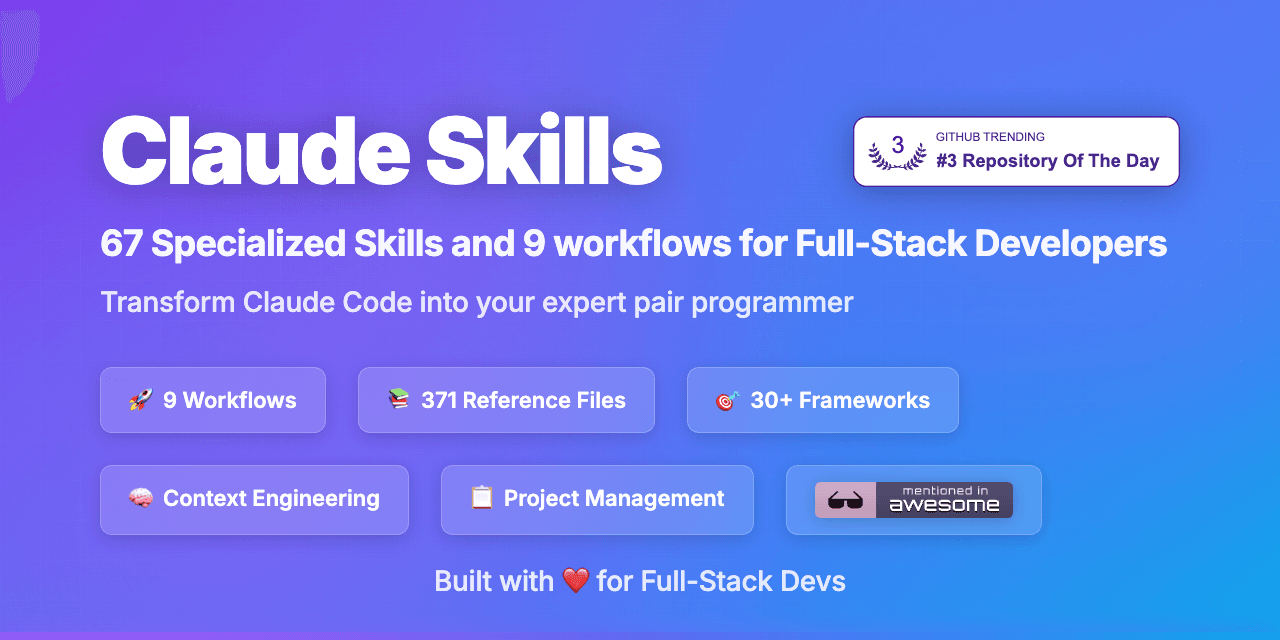
claude‑skills supplies 67 specialized Claude skill modules aimed at full‑stack developers, turning Claude into an expert pair programmer.

  • 67 specialized skills

Each skill encapsulates a common development task—such as code generation, debugging, or architecture suggestion—allowing Claude to respond with targeted, actionable assistance within a Python‑based framework.

ReleaseGitHub trending1,319 ★

ASC is a high‑speed Android decompiler front‑end aimed at agents and mobile researchers.

It serves as a lightweight front‑end that can be integrated into existing mobile‑security toolchains, prioritizing speed over full decompilation fidelity. The project targets rapid analysis scenarios where quick code insight is essential.

RepoGitHub trending · rust18,237 ★

Openfang is an open‑source agent operating system written in Rust.

The system provides a foundation for building autonomous software agents, offering core OS‑like services such as scheduling and inter‑agent communication. Its Rust implementation emphasizes safety and performance, and the open‑source license encourages community contributions.

RepoGitHub trending · c++42,374 ★

aria2 is a lightweight, multi‑protocol command‑line download utility that runs cross‑platform.

  • Supports HTTP/HTTPS
  • Supports BitTorrent
  • Cross‑platform CLI

aria2 can combine multiple sources for a single download, improving speed and reliability. It handles protocols like FTP, SFTP, and Metalink in addition to HTTP and BitTorrent, making it suitable for diverse downloading needs from the terminal.

You’re all caught up.

27 stories from 204 scanned overnight.

archived edition · 204 fetched → 27 publishedj/k move · enter expand · o open · / search